A Review of ‘Medical Editing’ by Barbara Gastel
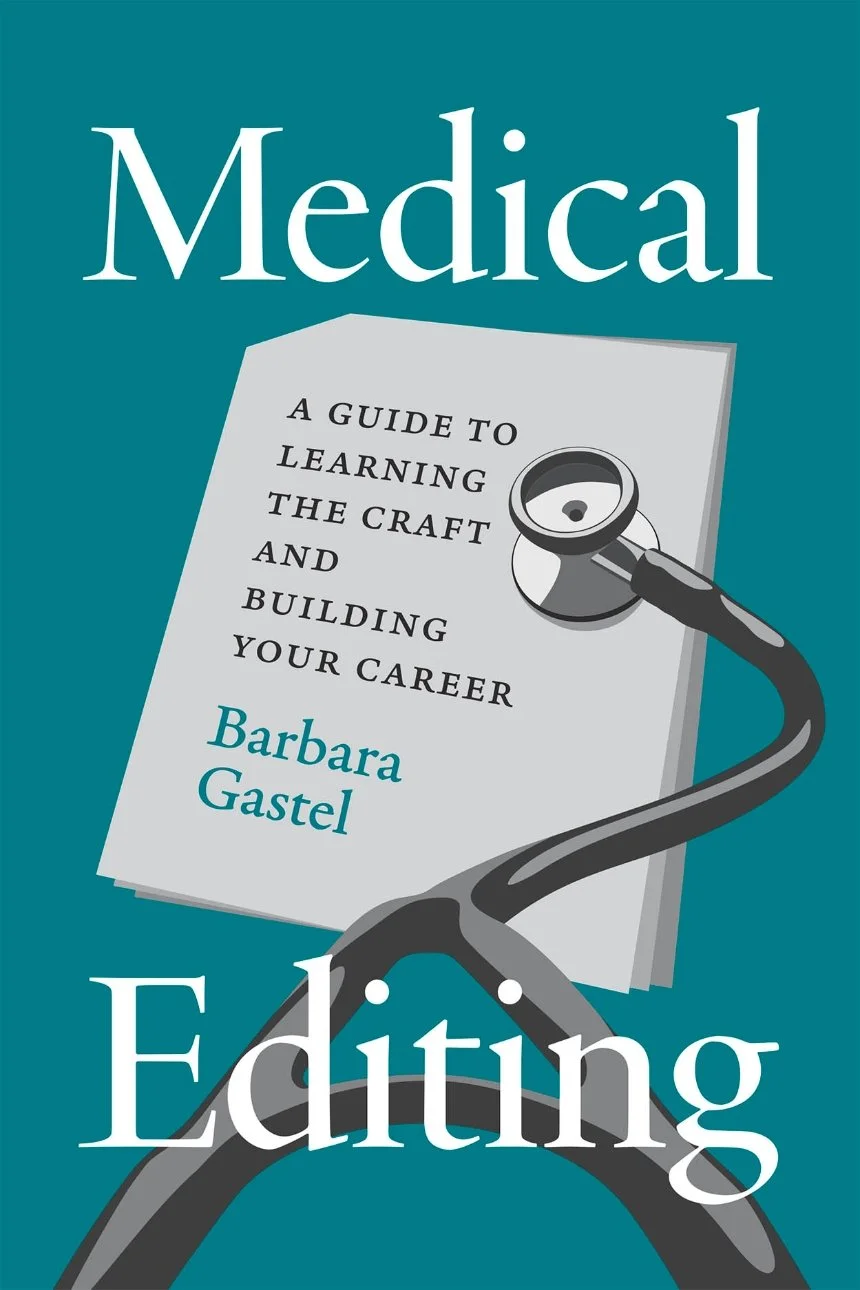
Of all the ways to begin a book on medical editing, a poem would not be my first (or second or third) guess. But here we are. Dr. Barbara Gastel opens Medical Editing: A Guide to Learning the Craft and Building Your Career with a clever, humorous verse—an introduction as unique as the text itself. There is currently no book in print dedicated to the field of medical editing. The intended audience includes prospective medical editors, newcomers to the editing profession, and those seeking additional information on medical editing for themselves or their mentees.
Published in December 2025 by the University of Chicago Press, the book is an outgrowth of Gastel’s teaching at Texas A&M University and for the University of Chicago’s medical writing and editing certificate program. Each chapter of the book is designed to stand alone, which leads to some modest redundancies. The resources chapter appears early in the book, underscoring the author’s point that such resources are foundational to becoming a competent medical editor. While the pages are packed with information, they are easy to skim—even for those of us with TL;DR syndrome.
Gastel is a specialist in biomedical writing and editing and serves as a professor at Texas A&M University, where she directs the master’s program in science and technology journalism. She earned a BA from Yale University, and an MD and Master of Public Health from Johns Hopkins University. Her CV includes experience with institutions such as Newsweek, the National Institutes of Health, the Massachusetts Institute of Technology, Peking University, and the UCSF (University of California, San Francisco) School of Medicine. The Board of Editors in the Life Sciences, an organization that recognizes and certifies editors in the life sciences field, has also named Gastel an Honored Editor.My background is as a nurse practitioner, which included frequent exposure to medical literature. For me, the book’s first chapter (“The Scope of Medical Editing”) was a little slow, though some readers—especially those new to medical editing—may find the pacing just right. However, starting with chapter 2 (“Key Resources for Medical Editors”), I was hooked, and I took notes on new resources as I read. Whenever I had a question, the answers appeared almost immediately, complete with URLs. As I continued reading, I was impressed by the sheer volume of information in the book—but I never felt overwhelmed. It dawned on me that the author writes as she asks us to edit: with conciseness, readability, and clarity. There are many unique sections, including in chapter 3, which covers the differences between literary and medical editing and the concept of editing order. These are topics that I have never seen explicitly addressed in other editing resources. Each chapter also includes key points, sidebars, and sometimes exercises to solidify learning.
The book covers a wide range of practical topics. Chapters include “Approaching an Editing Project,” “Editing Conference and Career Communications,” “Ethics: Your Own and Others,” and “Careers in Medical Editing.” Appendices include examples of style sheets. The review copy I received did not yet contain an index, which will make the book even more user friendly once completed.
The prose is highly readable, making the fact-heavy content easy to absorb. Touches of humor are injected to break up the density of the material. Some jokes even made me laugh out loud, eliciting odd looks from my spouse and even my dogs..
Overall, I would highly recommend this book to prospective and practicing medical editors alike. Even as a more experienced editor, I came away with valuable lessons and new resources to add to my editorial quiver. Finally, it’s worth recognizing—and celebrating—this book as a clear reflection of the author’s remarkable contributions to the field of medical editing. Brava!